Diabetes Insipidus Lch
Diabetesinsipidus. this is the most common cns manifestation of lch 2-6. patients with diabetes insipidus in lch demonstrate a lack of t1-weighted high intensity of the posterior pituitary with associated enhancement and thickening (>3 mm) of the infundibulum 2-6. What is diabetes insipidus? diabetes insipidus is a rare condition that causes your body to make a lot of urine that is "insipid," or colorless and odorless. most people pee out 1 to 2 quarts a. Diabetes insipidus 4 fig. 2. gadolinium-enhanced mris show a hypothalamic mass in two patients with lch (a, b), each of which was histopathologically confirmed to be lch by biopsy. This test is used to diagnose diabetes insipidus, which may be caused by lch. bone marrow aspiration and biopsy: the removal of bone marrow and a small piece of bone by inserting a hollow needle into the hipbone. a pathologist views the bone marrow and bone under a microscope to look for signs of lch. enlarge bone marrow aspiration and biopsy.
Nephrogenic diabetes insipidus. since the kidneys don't properly respond to adh in this form of diabetes insipidus, desmopressin won't help. instead, your doctor may prescribe a low-salt diet to help reduce the amount of urine your kidneys make. you'll also need to drink enough water to avoid dehydration. Diabetes insipidus. this is the most common cns manifestation of lch 2-6. patients with diabetes insipidus in lch demonstrate a lack of t1-weighted high intensity of the posterior pituitary with associated enhancement and thickening (>3 mm) of the infundibulum 2-6. Diabetesinsipidus (di) is the most frequent central diabetes insipidus lch nervous system (cns)‐related permanent consequence in langerhans cell histiocytosis (lch), which mostly requires life‐long hormone replacement therapy.
Isolated Langerhans Cell Histiocytosis In The Hypothalamic
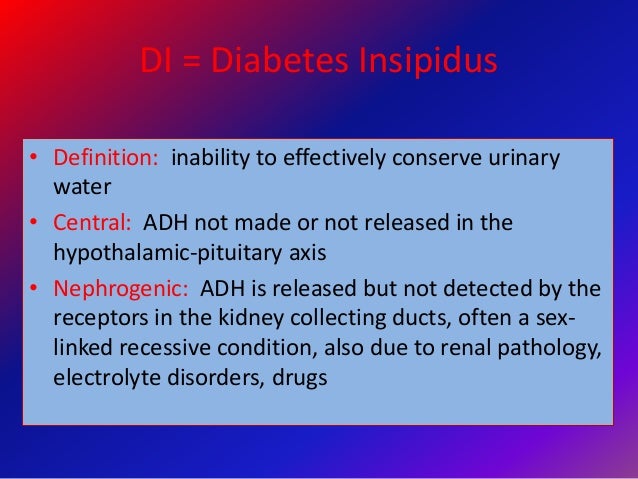
Langerhans cell histiocytosis (lch) is a disorder that primarily affects children, but is also found in adults of all ages. people with lch produce too many langerhans cells or histiocytes, a form of white blood cell found in healthy people that is supposed to protect the body from infection. in people with lch, these cells multiply excessively and build up in certain areas of the body. Diabetes insipidus is a rare disorder that occurs when a person's kidneys pass an abnormally large volume of urine that is insipid—dilute and odorless. in most people, the kidneys pass about 1 to 2 quarts of urine a day. in people with diabetes insipidus, the kidneys can pass 3 to 20 quarts of urine a day. Diabetesinsipidus (di) is a condition characterized by large amounts of dilute urine and increased thirst. the amount of urine produced can be nearly 20 liters per day. reduction of fluid has little effect on the concentration of the urine. complications may include dehydration or seizures.. there are four types of di, each with a different set of causes.
Central Diabetes Insipidus Beware Of Langerhans Cell
The triad of diabetes insipidus, exopthalmos, and lytic bone lesions is known as the hand-schüller-christian triad. peak onset is 2–10 years of age. multifocal multisystem. multifocal multisystem lch, also called letterer-siwe disease, is an often rapidly progressing disease in which langerhans cell cells proliferate in many tissues. it is. Diabetesinsipidus (die-uh-bee-teze in-sip-uh-dus) is an uncommon disorder that causes an imbalance of fluids in the body. this imbalance makes you very thirsty even if you've had something to drink. it also leads you to produce large amounts of urine. while the terms "diabetes insipidus" and "diabetes mellitus" sound similar, they're not related.
Diabetesinsipidus Symptoms And Causes Mayo Clinic
Diabetesinsipidus (di) is defined as the passage of large volumes (>3 l/24 hr) of dilute urine (< 300 mosm/kg). it has the following 2 major forms: central (neurogenic, pituitary, or neurohypophyseal) di, characterized by decreased secretion of antidiuretic hormone (adh; also referred to as arginine vasopressin [avp]) nephrogenic di, charac. Central diabetes insipidus (cdi) and anterior pituitary deficiencies (apd) frequently develop in patients with hprinvolved lch. the most common type of hormone deficiency in children and adults with hpr involved lch is growth hormone (gh) deficiency (53–67%) [ 7 ] followed by gonadotropin (53–58%) and thyroid-stimulating hormone (3. 9%. Diabetesinsipidus (di) is the deficiency or resistance to the hormone vasopressin (antidiuretic hormone), which results in polyuria and polydipsia. epidemiology di occurs in 3 per 100,000 people 2. pathology di may be described as 1-3: ce.
Management Of Langerhans Cell Histiocytosis Lchinduced
6. can diabetes insipidus occur before the diagnosis of lch? di can be the first presenting symptom, although one-half of these patients develop lch lesions within 1 year after the onset of diabetes insipidus. 7. can diabetes insipidus due to lch occur when there is no known involvement anywhere else? yes. Diabetesinsipidus was diagnosed and treated with diabetes insipidus lch desmopressin. mri pituitary revealed hypophysitis. lch was suspected because of known pulmonary histiocytosis. coexisting bone lesions were biopsied and confirmed lch. case 3 is a 44-year old female presenting with diabetes insipidus. she was treated with desmopressin as well.
Isolated Langerhans Cell Histiocytosis In The Hypothalamic
Endocrine manifestations in langerhans cell histiocytosis.
Risk factors for diabetes insipidus in langerhans cell.
Background. diabetes insipidus (di) is an uncommon condition with either relative or absolute lack of anti-diuretic hormone (adh) leading to inability to concentrate the urine and subsequent polyuria/polydypsia and potentially fluid and electrolyte imbalance. Diabetes insipidus (di) associated with a thickened pituitary stalk is diabetes insipidus lch a diagnostic challenge in the pediatric population. langerhans cell histiocytosis (lch) is a rare cause of this entity. a 4-year-old male child presented with central di of 1-year duration, associated with a thickened pituitary stalk. Diabetesinsipidus (di) associated with a thickened pituitary stalk is a diagnostic challenge in the pediatric population. langerhans cell histiocytosis (lch) is a rare cause of this entity. a 4-year-old male child presented with central di of 1-year duration, associated with a thickened pituitary stalk. Diabetes insipidus. diabetes insipidus (di) is a rare disorder that can occur as a consequence of histiocytosis involving the pituitary gland. it should not be confused with the more common diabetes mellitus, also known as sugar diabetes, which results from too much sugar in the blood.


Lch first appeared in the medical diabetes insipidus lch literature around 1900 with reports of children with skin lesions, lytic bone lesions, and diabetes insipidus (di), classified as hand-schüller-christian disease. Can diabetes insipidus occur before the diagnosis of lch? di can be the first presenting symptom, although one-half of these patients develop lch lesions within 1 year after the onset of diabetes insipidus. can diabetes insipidus due to lch occur when there is no known involvement anywhere else? yes. Diabetes insipidus was diagnosed and treated with desmopressin. mri pituitary revealed hypophysitis. lch was suspected because of known pulmonary histiocytosis. coexisting bone lesions were biopsied and confirmed lch. case 3 is a 44-year old female presenting with diabetes insipidus. she was treated with desmopressin as well. More diabetes insipidus lch images.
Langerhans cell histiocytosis is a rare, multisystem disease that shows a particular predilection for hypothalamo–pituitary axis involvement. diabetes insipidus is the most frequent permanent consequence of langerhans cell histiocytosis, developing in around a quarter of patients. although the exact prevalence of anterior pituitary hormone deficiencies is not known, it is probably high and. Diabetes insipidus (die-uh-bee-teze in-sip-uh-dus) is an uncommon diabetes insipidus lch disorder that causes an imbalance of fluids in the body. this imbalance makes you very thirsty even if you've had something to drink. it also leads you to produce large amounts of urine. while the terms "diabetes insipidus" and "diabetes mellitus" sound similar, they're not related. Conclusion: adipsic diabetes insipidus is a rare and dangerous condition and especially difficult to manage when combined with cognitive dysfunction. we urge clinicians to consider the diagnosis of langerhans cell histiocytosis in patients presenting with a hypothalamic mass, diabetes insipidus, hypopituitarism, and cognitive impairment.


Comments
Post a Comment